HealthcareAutism care
NuuroTherapy
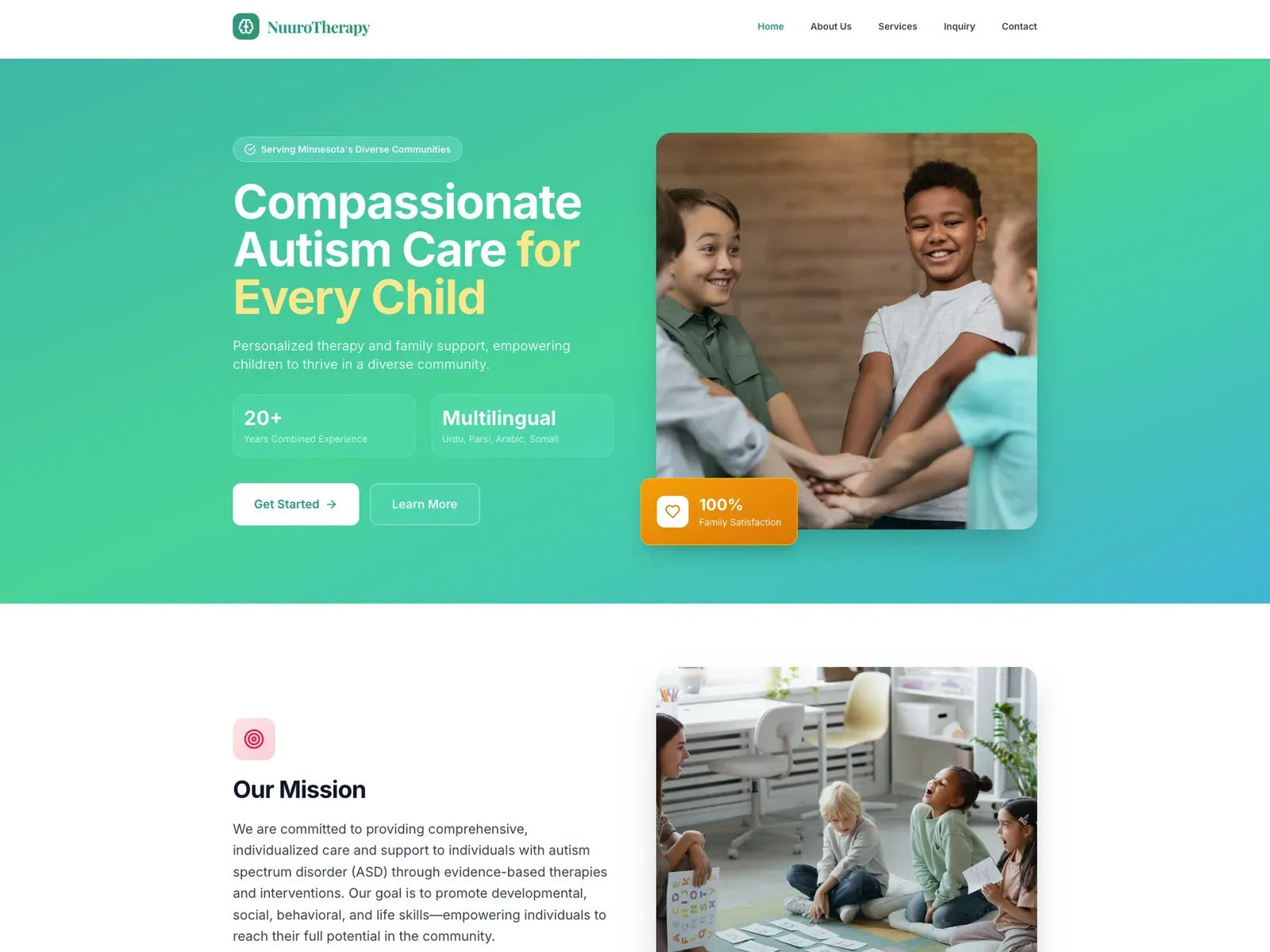
Compassionate autism care in Burnsville, MN. NuuroTherapy offers ABA therapy, speech therapy, occupational therapy, early intervention, and family support for children with autism.
ABA, EIDBI, waiver services & disability advocacy
The person reading your website usually got the diagnosis in the last three weeks. They have a CMDE to schedule, a county case manager they have not met yet, and a folder of acronyms nobody sat down and explained. What they want from your site is not your philosophy of care. It is four answers: do you take Medical Assistance, do you serve my county, do you work with a four-year-old, and how long is the wait. Most autism and disability provider sites in Minnesota answer none of those without a phone call.
Four websites delivered in this sector: NuuroTherapy, an ABA, speech, and occupational therapy provider in Burnsville; Najaah Center, which provides individualized autism support; Maangaar Voices, an immigrant disability advocacy organization; and Access Disability Services, which represents people through SSI, SSDI, and CDR claims.
We build for three readers who rarely overlap: that parent, the county case manager comparing four providers before lunch, and the disabled adult filing an SSI appeal on a phone with a cracked screen. Each needs a different first click. Underneath all of it sits a constraint most agencies treat as a nice-to-have and we do not: your clients are disabled. A site that defeats a screen reader or a switch user is not a shortfall in the design. It is your organization saying something about disabled people that it did not mean to say.
Worth knowing
If your clients are people with disabilities, an inaccessible website is a credibility failure before it is a compliance one — and referral sources notice. We build to WCAG 2.1 AA practice as standard: semantic structure, keyboard navigation with visible focus, real alt text, honest contrast, no information carried by colour alone, and respect for reduced-motion settings. Sensory considerations get the same treatment: no autoplay video or audio, restrained animation, generous spacing, and calm colour. Formal conformance testing against a documented standard is available separately when a funder or contract requires it.
Published ranges, not a call-for-pricing page. These are what projects in this sector actually land at with us. Your number depends on page count, functionality, and how much content support you need.
Provider or advocacy site
Services, coverage answers, a small family intake form, a case-manager referral path, staff bios, and a careers page. The right size for one clinic, one office, or one advocacy practice.
$3,500 to $7,000
Multi-service provider site
Several service lines, multiple sites or counties, separate family and referral journeys, a resource library, translated pages, and a careers section built to carry real hiring load through the year.
$7,000 to $16,000
Ongoing care
Keeps waitlist status, coverage details, and staff lists current, with backups, security, and an accessibility pass after content changes. Optional, month to month, and worth dropping if it stops earning it.
$100 to $350 / month
Want the full breakdown across every service? See ourpricing page.
Proof
Real projects, real organizations, live sites you can go and look at.
Compassionate autism care in Burnsville, MN. NuuroTherapy offers ABA therapy, speech therapy, occupational therapy, early intervention, and family support for children with autism.
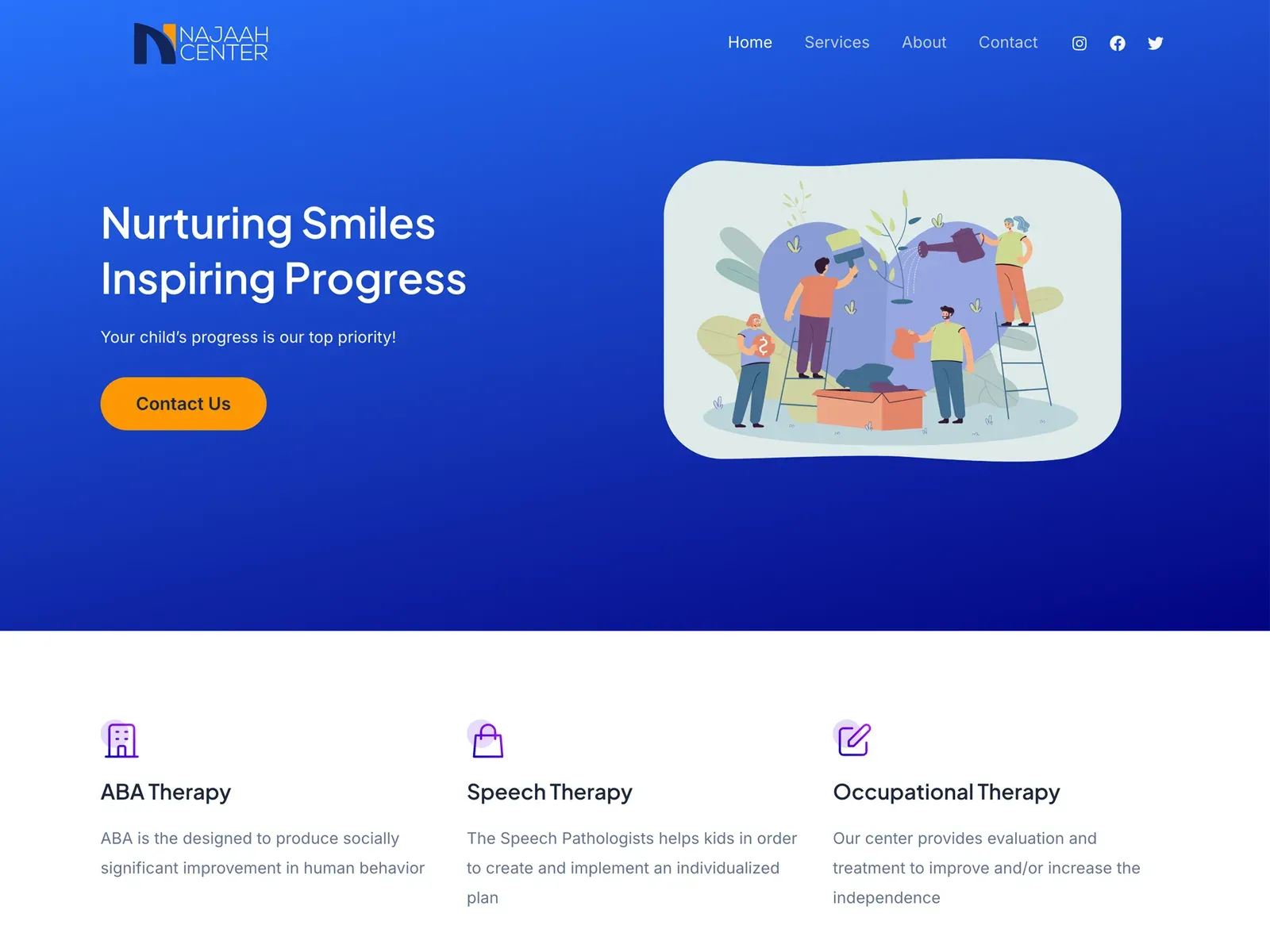
Najaah Center provides individualized care and support services that enable people with autism to learn and hone skills that develop their potential as self-sufficient individuals. They also educate families on ways to cope with autism.
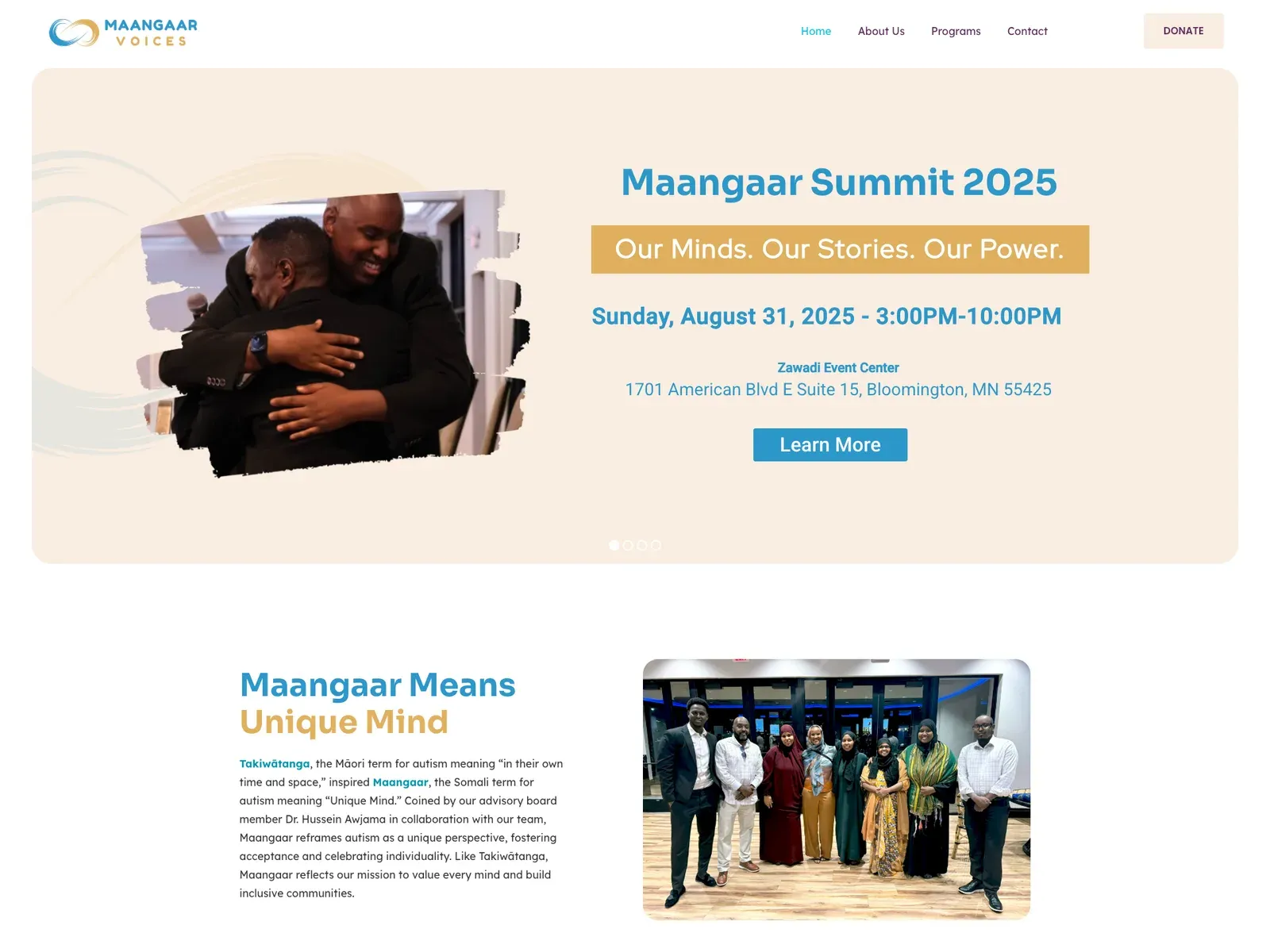
Maangaar Voices was officially founded in 2024, building upon nearly two decades of grassroots advocacy and activism for the immigrant disability community.
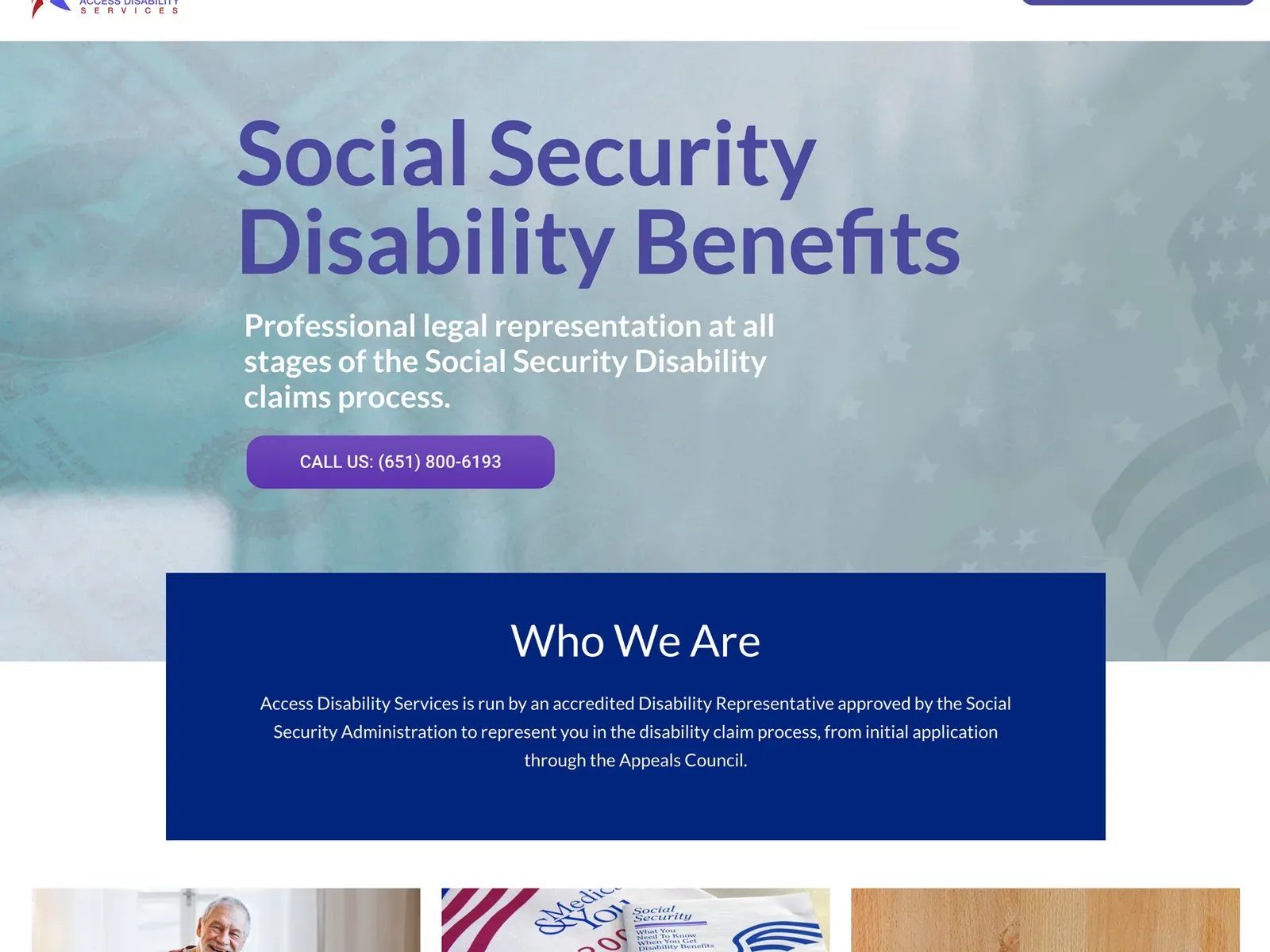
Access Disability Services (ADS) provides Social Security disability representation and advocacy for individuals who need help with SSI, Child SSI, SSDI, overpayments, spousal disability benefits, and Continuing Disability Review (CDR) claims.
How we work
We listen to your goals, gather your requirements, create a design strategy, and deliver a website that works. Here is what that looks like.
We listen to your goals. A short conversation about your organization, your audience, and what success looks like.
We gather your requirements and turn them into a clear design strategy, sitemap, and timeline you can sign off on.
Our designers and developers craft a responsive, fast, and accessible product tailored to your brand.
We deliver a website that works, then stay available for updates, security checks, and improvements as you grow.
FAQ
We know the sequence — diagnosis, CMDE, ITP, then authorized services — and we know why a family arrives confused about which of those you do. You supply the clinical and billing accuracy; we handle structure, plain language, and the order the questions get answered in. It saves you the round of edits where a page is technically correct and unreadable.
Your call, and we will ask at kickoff rather than guess. Parents of young children and state paperwork mostly use person-first language; many autistic adults prefer identity-first and read the puzzle piece and the blue palette as a signal about who a provider listens to. We pick one convention, use it consistently across the site, and default away from puzzle imagery unless you want it.
Yes, by keeping the public form small. Name, contact, county, age, and best time to call are enough to start; diagnosis details and documents belong in your secure system, not an email inbox. We also keep advertising pixels and session recorders off intake and service pages, since third-party trackers on health pages are a known exposure and a common audit finding.
No. Overlay widgets sit on top of the markup, screen reader users routinely switch them off, and sites that installed one still receive demand letters. Accessibility has to be in the build: headings, labels, focus order, contrast, and honored reduced-motion settings. We test with a keyboard, a screen reader, and 200% zoom before launch, and again after major content changes.
Only if you let it be specific. Pay range, whether the forty-hour training and competency assessment are paid, how much drive time an in-home caseload involves, supervision hours with a BCBA, and benefits at what hour threshold. That page, plus an application that works on a phone and gets answered within a day, usually outperforms the job-board spend it replaces.
Start a project
Let's work together to create solutions that make a real impact. Tell us about your project and we'll come back with a clear plan.