Niyyah Recovery Initiative
Niyyah Recovery Initiative is the first Recovery Community Organization (RCO) serving the unique needs of the East African community in Minnesota. While culturally responsive to East Africans, they serve everyone.
Recovery community organizations & treatment programs
Most people who reach a recovery website are not the person who needs help. It is a mother on a shared phone at eleven at night, a wife who has not told anyone, a brother between shifts. They want three things before they will call: what happens when I dial this number, does it cost anything, and will anyone there understand my family. Almost no site answers those three. Ours start there, because the difference between a call and a closed tab is usually about forty seconds of reading.
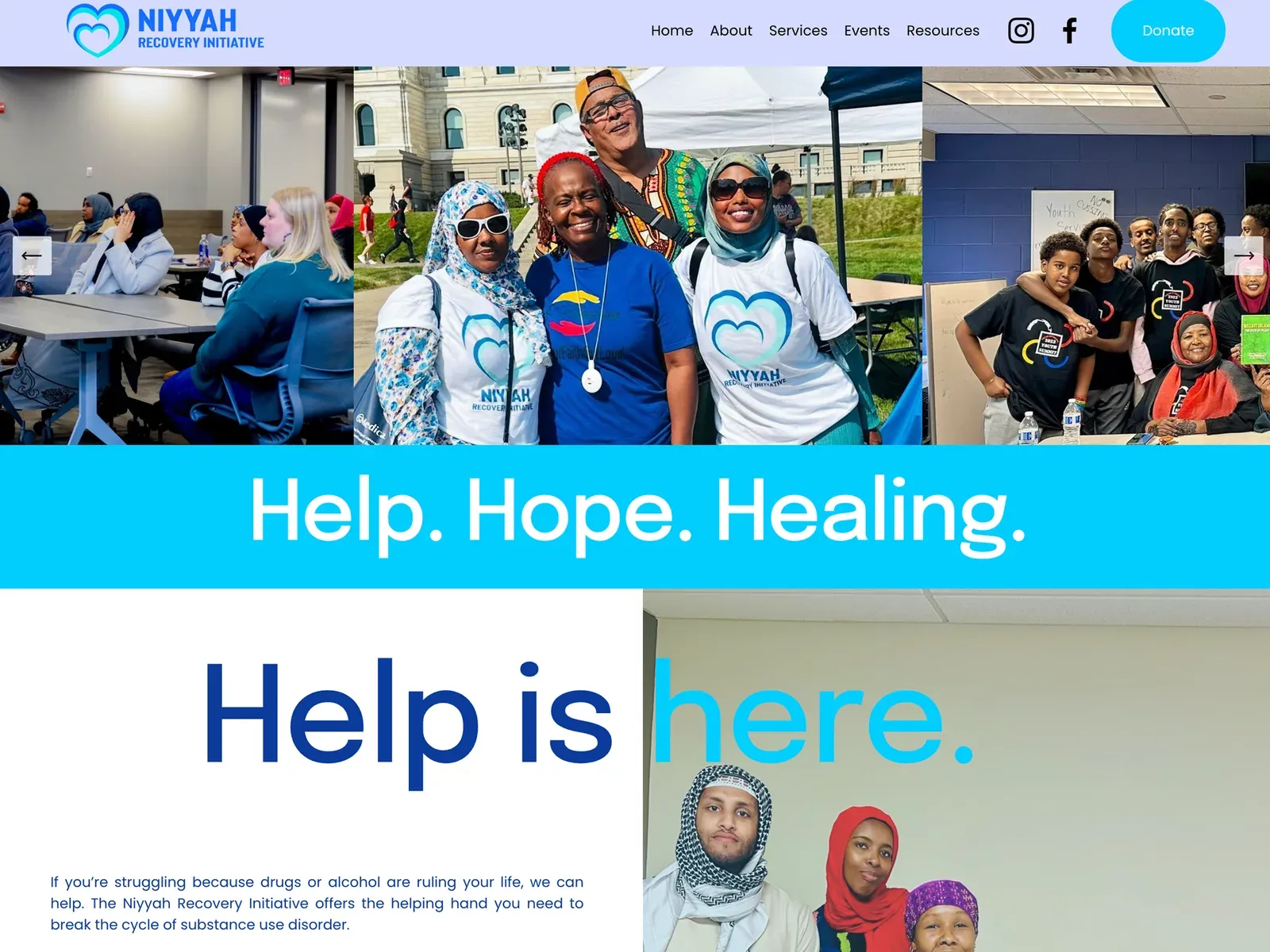
One recovery client, not a portfolio of them: we designed and built the site for Niyyah Recovery Initiative, the first Recovery Community Organization serving the East African community in Minnesota.
The second thing to know is that you cannot buy your way out of a weak site here. Google and Meta require LegitScript certification before they will run addiction-services ads — an application, an annual fee, and a review measured in weeks, with a narrow exemption path for nonprofits. Meanwhile national lead brokers who cleared that bar bid on your organization's name. What is left to you is organic search, your Google Business Profile, and the directories referral partners actually open: FindTreatment.gov, Fast-Tracker, county provider lists. That is the entire argument for building this page properly.
Worth knowing
Paid advertising for addiction treatment is heavily restricted — Google requires certification through a third-party verification programme before most treatment-related ads can run, and the process takes time and money. That pushes the balance decisively toward organic search, which in turn makes the content on your own site the main channel rather than a supporting one. Separately, confidentiality expectations in this field are stricter than in general healthcare, so we keep website forms deliberately thin and never ask a visitor to disclose a substance-use history to a web form.
Published ranges, not a call-for-pricing page. These are what projects in this sector actually land at with us. Your number depends on page count, functionality, and how much content support you need.
Peer or single-program site
Eight to twelve pages: who you are, what happens when someone calls, one program line explained plainly, private intake, and a meeting schedule your staff can change without us.
$3,500 to $7,000
Multi-level or licensed treatment site
Several levels of care, more than one location, separate paths for families and referral partners, payment and Behavioral Health Fund answers, careers, and the documentation counties ask for. Six to ten weeks.
$7,000 to $18,000
Ongoing care
Hours, staff, meeting times, and directory listings kept accurate, plus your Google Business Profile watched. Local search is priced separately from $500 a month, and here it is usually the better second dollar.
$125 to $450 / month
Want the full breakdown across every service? See ourpricing page.
Proof
Real projects, real organizations, live sites you can go and look at.
Niyyah Recovery Initiative is the first Recovery Community Organization (RCO) serving the unique needs of the East African community in Minnesota. While culturally responsive to East Africans, they serve everyone.
How we work
We listen to your goals, gather your requirements, create a design strategy, and deliver a website that works. Here is what that looks like.
We listen to your goals. A short conversation about your organization, your audience, and what success looks like.
We gather your requirements and turn them into a clear design strategy, sitemap, and timeline you can sign off on.
Our designers and developers craft a responsive, fast, and accessible product tailored to your brand.
We deliver a website that works, then stay available for updates, security checks, and improvements as you grow.
FAQ
Not until you hold LegitScript certification, which Google and Meta both require for addiction services. It costs money, takes weeks, and reviews your licensing and business practices; some nonprofits qualify for an exemption, but the answer is not guaranteed and the wait is real. Plan for organic search, your Google Business Profile, and directory listings to carry the traffic, and treat ads as something you may add later.
Yes, and they should be able to. We build a first step that asks for one field — a phone number or an email — with everything else optional, send the auto-reply from a neutral sender line, and keep advertising pixels and session recording off intake pages entirely. Forms run on tooling that will sign a BAA, not a plugin that emails submissions to a shared inbox in plaintext.
Say it on the first screen. Being an RCO rather than a 245G program is not a weakness, it is the reason some people will call you instead — no assessment, no insurance, no waitlist. But a county case manager who assumes you are licensed treatment will send someone who needs a different level of care, and that person pays for the confusion, not you.
No. Urgency widgets are the visual signature of the call-center marketers people are trying to avoid, and the same page usually carries a verify your insurance form that is really a lead capture. What moves a hesitant caller is duller: your hours in plain type, what you do when you are closed, 988 listed without embarrassment, and a named human who answers.
Yes, with two cautions. Machine translation of clinical and legal language produces sentences that are wrong in ways your staff will not catch, so we budget for a human translator and a review by someone in the community. And written Somali is not every elder's strongest reading language — a two-minute video from a person they recognize often does more than a translated page.
Start a project
Let's work together to create solutions that make a real impact. Tell us about your project and we'll come back with a clear plan.